Westland is big and varied — 1960s ranches in the older sections, 70s–80s colonials and split-levels across the middle, and everything in between. No single roof type defines it, which is exactly why we lead with diagnosis: the right fix for a 1965 ranch is different from the right fix for a 1985 colonial with a cut-up roofline. Whatever's over your head, we scope it honestly.
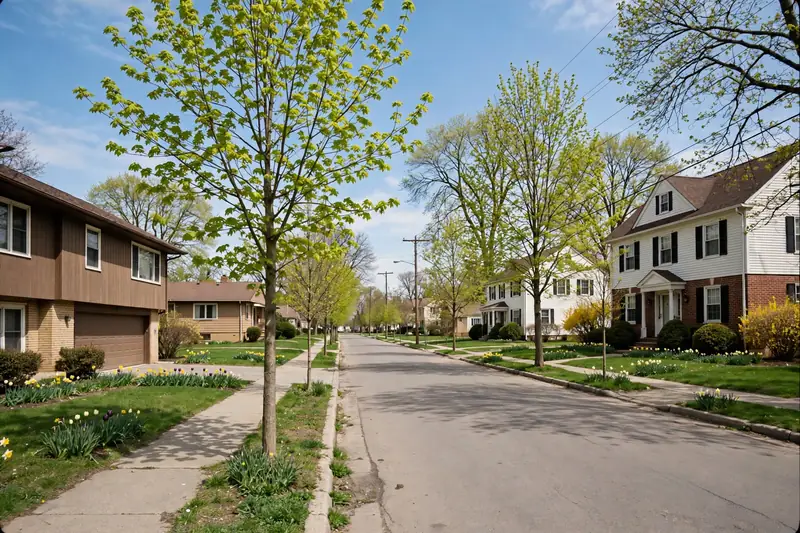
The full post-war spectrum: simple ranch gables, split-levels with intersecting planes, and two-story colonials with valleys, dormers, and multiple penetrations. Materials are overwhelmingly asphalt shingles across several generations — which means we see every stage of shingle aging somewhere in Westland on any given week.
Valley failures on complex roofs. Cause: decades of water funneled through the same valleys on cut-up rooflines. Effect: the widest, fastest-spreading leaks we see.
Penetration leaks on aging roofs. Cause: vent boots, flashing, and skylight curbs aging out. Effect: targeted, very repairable leaks — if the field shingles have life left.
Storm damage across all ages. Cause: Westland's open exposure to the same cells that hit the rest of western Wayne County. Effect: wind-lifted tabs and hail bruising, sometimes hidden for months.
We match the fix to the roof: simple repairs stay simple on simple roofs, and complex rooflines get the careful valley and transition work they demand. Storm calls get dated photo documentation before repair. Aging roofs get the evidence-based repair-vs-replace conversation with photos you keep. One written quote, no surprises.
Ranches, split-levels, colonials — diagnosed on their own merits.
Complex intersections rebuilt to shed water correctly.
Dated photos before repair, adjuster-ready.
Scope and price in writing before any work starts.
Photo-documented inspection. Written quote before work starts. The cheapest repair is the one you make now.
Call (313) 769-7896